

Our Team
We have experts from leading institutions worldwide working together to ensure the mission's success.
Team spotlight


We are grateful to the supporters who made this project possible.
- Arnold Ventures
- The Audacious Project
- Ballmer Group
- D N Batten Foundation
- The Benificus Foundation
- Bezos Earth Fund
- Christina and Jeffrey Bird
- Builders Vision
- Catena Foundation
- The Ting Tsung and Wei Fong Chao Foundation
- The Children's Investment Fund Foundation
- J and Suzanne Crandall
- Rachel Crane
- John S. Curry
- Aart de Geus and Esther John
- Duff & Phelps Charitable Foundation
- Tony Fadell
- Global Methane Hub
- Bev Grant
- Heising-Simons Family Fund
- Barbara and Amos Hostetter
- King Philanthropies
- The Lemelson Foundation
- Patrick J. McGovern Foundation
- Julie and Ian McGuire
- The Cynthia & George Mitchell Foundation
- New Zealand Ministry of Business, Innovation, and Employment
- Charles M. Nunzio
- Bill and Susan Oberndorf Foundation
- Pat and Patti O'Donnell
- Signe Ostby and Scott Cook
- The Parke Family
- Quadrivium Foundation
- Robertson Foundation
- Ted and Linda Schlein
- Skoll Foundation
- Skyline Foundation
- Three Cairns Group
- Three Graces Foundation
- Valhalla Foundation
- Andrew W. Verhalen
- Sue Wagner and Neal Leonard
- Zegar Family Foundation
- Anonymous Donors
Meet the team
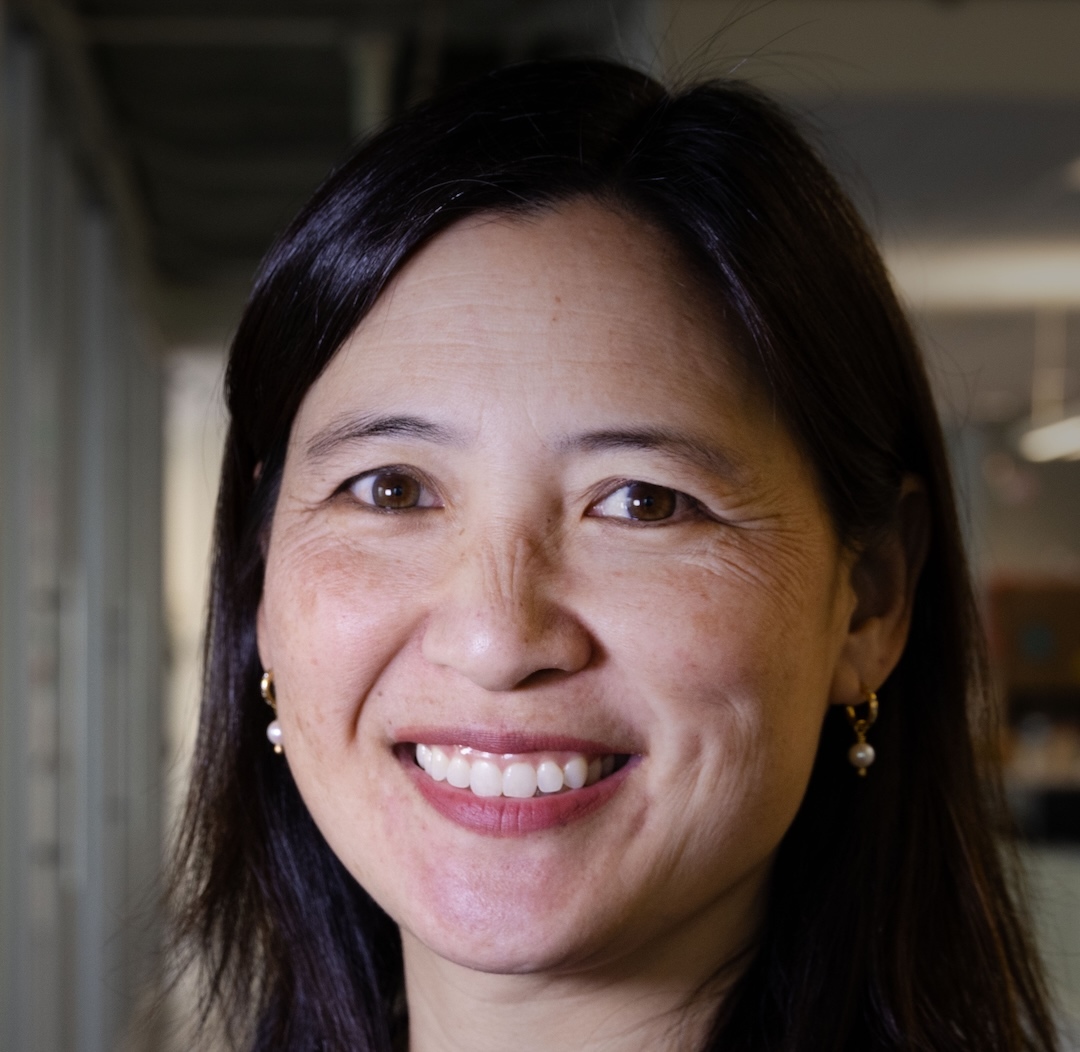
Millie leads innovative projects that produce actionable data to help solve environmental problems. She currently leads Mission Impact for EDF’s MethaneSAT. Its ability to find and measure methane emissions with unequaled accuracy will provide the data required to motivate and reduce methane emission globally.
Róisín Commane is an Associate Professor in Earth & Environmental Sciences at Columbia University in New York City and a researcher at the Lamont-Doherty Earth Observatory. She measures atmospheric trace gases from aircraft, towers, drones and a mobile lab to quantify rates of gas emissions from both natural and human sources, in cities and in remote areas. She runs a network of observation sites around New York City where she uses multi-gas species analysis to identify previously unidentified sources of methane and other forms of air pollution to develop pathways to reduce these emissions in cities. She worked on the NASA ATom mission and the global coverage of CO2, methane and CO have been used extensively in satellite validation studies. She was PI of the (unsuccessful) CarbonFOX proposal to the NASA Earth Science Explorer solicitation in 2023.
Steve is the project lead of MethaneSAT and, in a separate capacity, Chief Scientist at Environmental Defense Fund, where he initiated and oversaw an unprecedented initiative involving over 150 scientists from more than 40 institutions measuring methane leakage across the U.S. natural gas supply chain. Steven serves as Chief Scientific Officer for the United Nations Environment Programme’s Global methane studies, a joint effort of UNEP, EDF, DG Energy (European Commission) and the Oil and Gas Climate Initiative companies. He was previously on the faculty of Brown University for 16 years. He has published more than 100 scientific papers and served as a lead author for the Intergovernmental Panel on Climate Change.
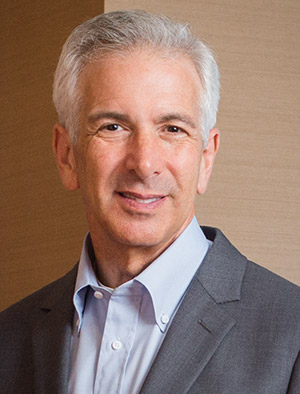
Fred is an influential voice on climate change, energy, and sustainability, and a champion for using the power of markets to protect our environment. Under his leadership since 1984, EDF has become one of the world’s largest and most influential environmental organizations. More recently, he coined the notion of a “Fourth Wave” of environmental innovation, where new technology, advanced analytics and collaborative problem-solving combine to shape smart policy and reward corporate responsibility, allowing both people and the planet to prosper. Fred introduced the idea for MethaneSAT in an April 2018 TED Talk.
Dr. Makenzie Lystrup serves as EDF’s Chief Technology Officer, advancing the organization’s work on climate accountability through space-based technologies. She works across EDF’s science, policy, economics and program teams to leverage space systems, advanced Earth observation, large-scale data integration, and emerging technologies to address climate change.
As CTO, Lystrup oversees work related to MethaneSAT’s efforts to deliver satellite data, cutting-edge science and analysis needed to track and reduce methane emissions from the oil and gas sector.