

Our Team
We have experts from leading institutions worldwide working together to ensure the mission's success.
Team spotlight


We are grateful to the supporters who made this project possible.
- Arnold Ventures
- The Audacious Project
- Ballmer Group
- D N Batten Foundation
- The Benificus Foundation
- Bezos Earth Fund
- Christina and Jeffrey Bird
- Builders Vision
- Catena Foundation
- The Ting Tsung and Wei Fong Chao Foundation
- The Children's Investment Fund Foundation
- J and Suzanne Crandall
- Rachel Crane
- John S. Curry
- Aart de Geus and Esther John
- Duff & Phelps Charitable Foundation
- Tony Fadell
- Global Methane Hub
- Bev Grant
- Heising-Simons Family Fund
- Barbara and Amos Hostetter
- King Philanthropies
- The Lemelson Foundation
- Patrick J. McGovern Foundation
- Julie and Ian McGuire
- The Cynthia & George Mitchell Foundation
- New Zealand Ministry of Business, Innovation, and Employment
- Charles M. Nunzio
- Bill and Susan Oberndorf Foundation
- Pat and Patti O'Donnell
- Signe Ostby and Scott Cook
- The Parke Family
- Quadrivium Foundation
- Robertson Foundation
- Ted and Linda Schlein
- Skoll Foundation
- Skyline Foundation
- Three Cairns Group
- Three Graces Foundation
- Valhalla Foundation
- Andrew W. Verhalen
- Sue Wagner and Neal Leonard
- Zegar Family Foundation
- Anonymous Donors
Meet the team
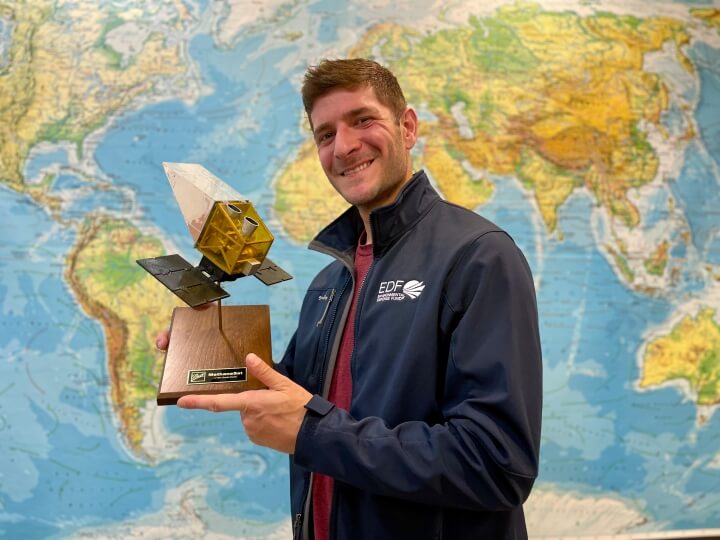
Joshua is a Senior Science Engineer for EDF, where he is working on the emissions detection and quantification systems focusing on atmospheric inversion of MethaneSAT and MethaneAIR observations to produce quantitative area-resolved methane fluxes. He also developed science and target planning software for MethaneSAT. He holds a BSc and MSc from the University of Waterloo in Canada and a PhD from Harvard University.
Ritesh oversees the MethaneSAT science team at EDF. He leads satellite remote sensing efforts focusing on the global oil and gas sector using MethaneAIR and MethaneSAT observations. Previously, Ritesh was a research scientist at NASA’s Goddard Space Flight Center in the Climate and Radiation Laboratory with Universities Space Research Association and a tenured faculty member at the Indian Institute of Technology (IIT Bombay). His experience is in satellite remote sensing of methane emissions, aerosols, clouds, snow and the climate effects of air pollution. Ritesh also serves as Co-Lead for the Atmospheric Composition and Asian Monsoon (ACAM) program. He has more than 70 scientific articles published in peer-reviewed literature.
In addition to his role on MethaneSAT, Luis supports the development of UNEP-IMEO's Methane Alert and Response System. His current research focuses on detection and quantification of methane point source emissions for MethaneSAT/MethaneAIR and other satellite missions. Luis is also a faculty member at the Universität Politècnica de València in Spain, leading the Land and Atmosphere Remote Sensing research group. Previously, he was head of the Remote Sensing Section of the GFZ Potsdam in Germany and Principal Investigator of the satellite imaging spectroscopy mission in 2014.
Harvey is a Geospatial Data Analyst for EDF working primarily on MethaneSAT and MethaneAIR datasets. His work collaborates with UNEP-IMEO’s Methane Alert and Response System and Harvard scientists to analyze point source emissions of methane from oil and gas sites across the globe. He holds a Master’s degree in Environmental Science (Pollution & Environmental Processes) from the University of Manchester
Marvin is an atmospheric physicist specializing in greenhouse gas emission measurements. He joined the MethaneSAT team in August 2024, where he contributes to advancing our methods for estimating emissions on regional scales. Marvin’s work centers on quantifying total emissions and producing detailed regional flux maps. He earned his PhD from Heidelberg University in Germany, where he broke new ground by deploying a ground-based spectral camera for carbon dioxide and methane emission monitoring.
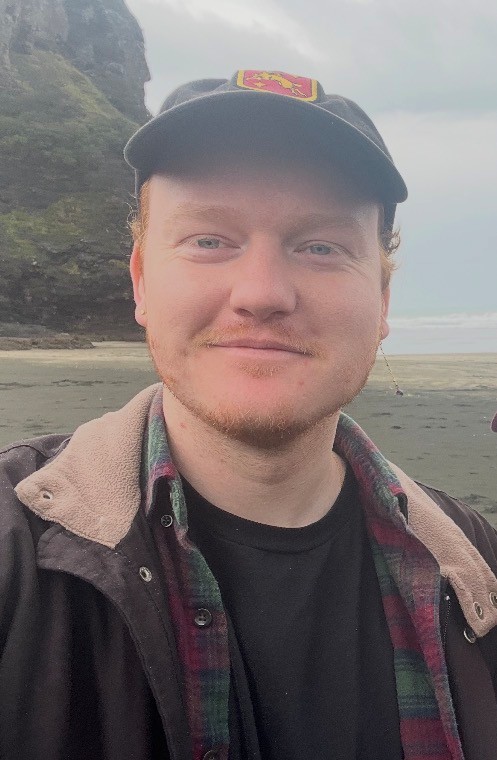
Ben is a Geospatial Analyst for the MethaneSAT science team assisting in reviewing MethaneSAT scenes and running analyses on data from the oil and gas sector. Prior to starting his position at EDF he worked as a geospatial analyst for another non-profit focused on oil and gas impacts in Texas and received both his bachelor's and master's from the University of North Texas studying Geography and Geospatial Science.

Katlyn’s work focuses on characterizing the magnitudes and sources of methane emissions in major oil and gas producing basins globally. She is also involved in analysis of MethaneAIR data. Katlyn has nearly a decade of experience measuring methane emissions across the oil and gas sector. She holds a PhD in Oil & Gas Engineering from Memorial University and a Master’s degree in Earth Science from St. Francis Xavier University.
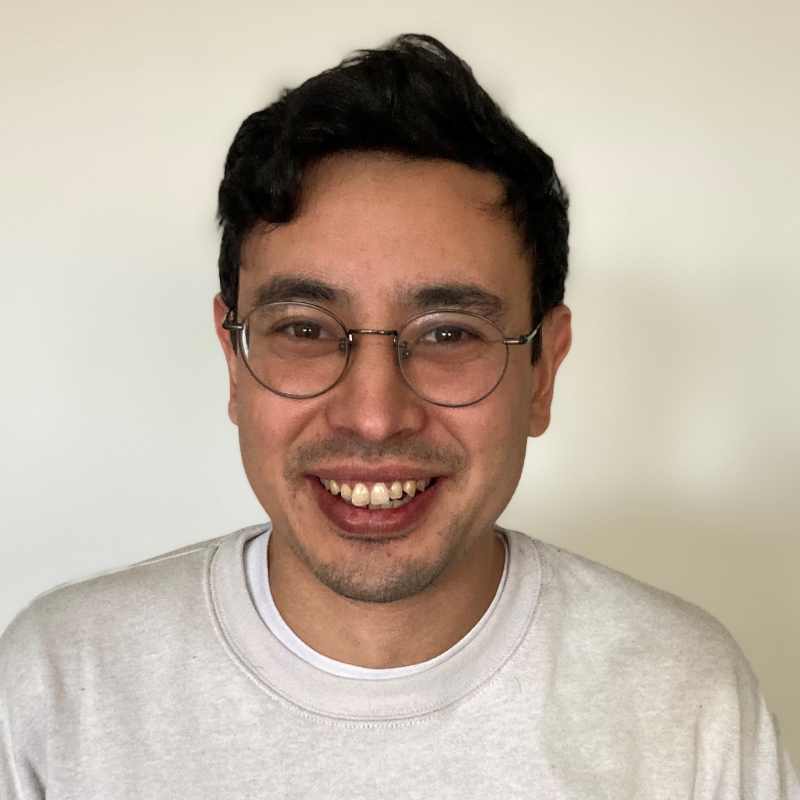
Chris is an atmospheric physicist specializing in applications involving radiative transfer in planetary atmospheres. He leads the development for Level-2 scientific algorithms for retrieving atmospheric methane concentrations. Previously, he worked on Earth-observing satellites as part of the TEMPO and OMI science teams and was a Co-investigator of the NASA MEaSUREs. Chris was a physicist at the Harvard-Smithsonian Center for Astrophysics and obtained his PhD from Harvard University in Earth and Planetary Science.
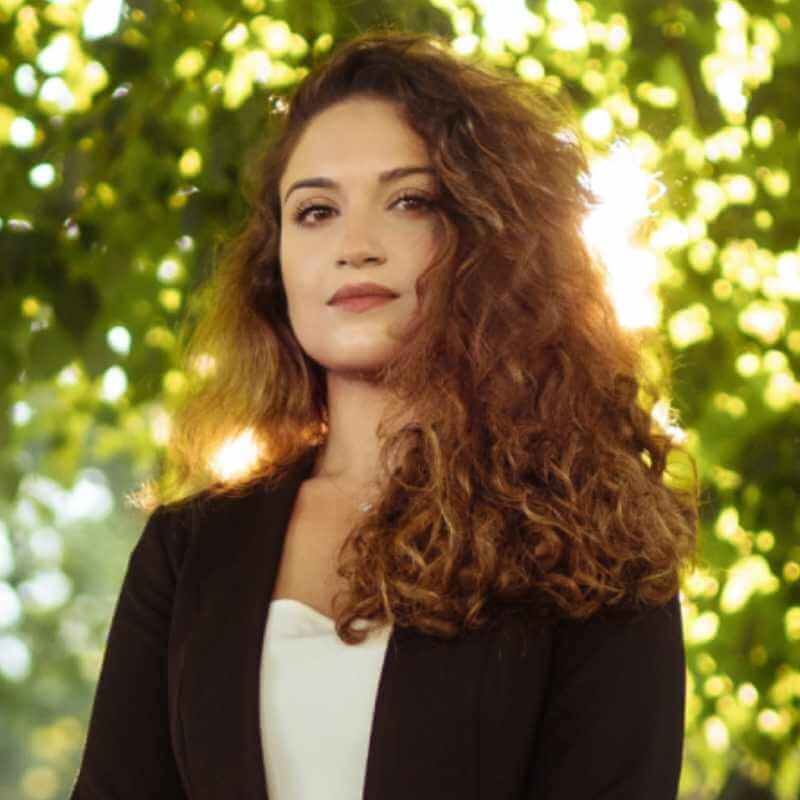
Maya is focused on mission planning for in-orbit calibrations and development of machine learning models for MethaneSAT, with expertise in spacecraft/instrument operations, engineering systems, technology strategy, and space law and policy. She is the project lead and co-founder of HUMANS, an ISS and Lunar symbolic avenue for space access worldwide. She also served as co-lead of the Space Law & Policy Project Group at the Space Generation Advisory Council. She previously worked on space projects including NASA’s Mars 2020 Perseverance rover mission, Cassini’s mission activity on Titan, and the OneWeb satellites network. She holds Bachelor’s, Master’s, and PhD degrees in Aerospace Engineering from MIT.
Mark is a Senior Scientist for Environmental Defense Fund, working on the MethaneSAT project. His current work focuses on global methane emission assessment using MethaneAIR and MethaneSAT observations. His research background is in oil and gas methane emissions measurement and characterization. He holds a PhD in Chemical Engineering from Clarkson University and previously worked as a postdoctoral research fellow at Carnegie Mellon University.
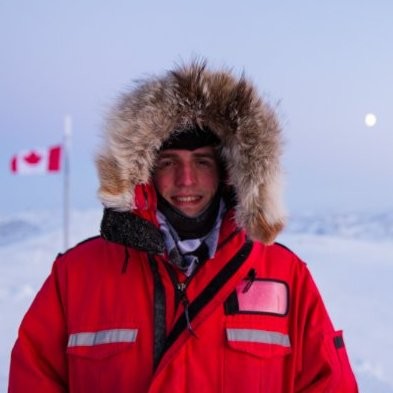
Sébastien works on the scientific algorithms used to derive the MethaneSAT Level 2 products. During his PhD at the University of Toronto, Sébastien experimented with a new algorithm of the Total Carbon Column Observing Network to retrieve vertical profile information of carbon dioxide concentration. He also worked on processing solar spectra from the Eureka (Nunavut, Canada) TCCON site. In a different project, he made use of NASA's ReFRACtor algorithm.
Jack joined Environmental Defense Fund in 2021 researching methane emissions in the Permian Basin as part of the PermianMAP project. As part of the MethaneSAT science team, his research and analysis now focuses on the evaluation, attribution, and analysis of methane emission sources detected by MethaneAIR and MethaneSAT observations globally. He has a bachelor’s degree from Columbia University.
Kaiya is a Geospatial Analyst focusing on large-scale oil and gas and non-oil and gas data and other geo-analytics. He worked as a geospatial data scientist in the past, and obtained his master’s and bachelor’s degrees from Boston University studying Remote Sensing/Geospatial Sciences and Earth/Environmental Sciences.
James Williams joined the MethaneSAT science team in June 2023. His work focuses on characterizing diffuse area methane emissions and developing emission distribution curves from the oil and gas sector. His previous research involved direct measurements and inventory development of methane emissions from abandoned oil and gas wells, gas distribution infrastructure, landfills, sewers, and urban water bodies. He earned his PhD at McGill University in Montreal, Canada.

Daniel is a senior scientist part of Environmental Defense Fund's Office of Chief Scientist. His current research focuses on providing actionable data that can accelerate the mitigation of methane emissions. He leads research projects around the world, improving the understanding of methane pollution, including with Environmental Defense Fund's MethaneSAT teams and in close partnership with UNEP's International Methane Emissions Observatory.